 Back
Back
Building the App I Actually Needed
Sika is a Telegram bot that reads your MoMo receipts, logs the spend, and tells you where your money actually went — no new app to download, no spreadsheet to maintain. Here's how it came together, and where it still needs to go. SikaFinance.com
Backstory
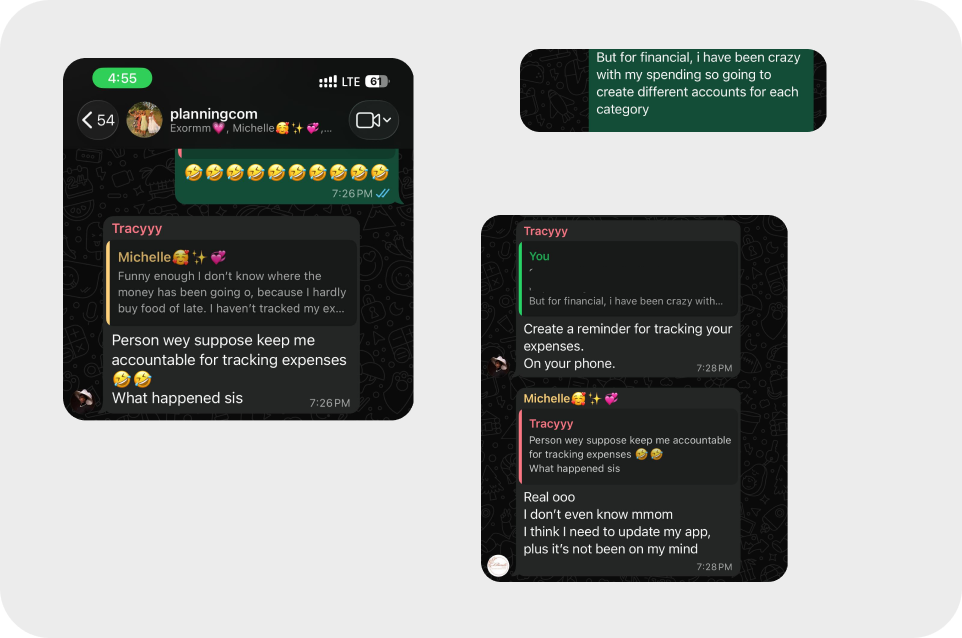
A goal review session that went somewhere else entirely
Sika didn't start as a product idea. It started as a random thought from my friend about how hard it is to track expenses. We had a goal review session — the kind where you're supposed to be talking about your goals and plans to complete them but instead you end up talking about everything that's going wrong in your life — and expense tracking came up. Specifically, how hard it is to actually do it.
Everyone i've spoken to about expense tracking had the same story. A budgeting app that would be the solution and would help you track every cedi but abandoned within a week. A notes app spreadsheet that stopped getting updated after day three because let's face it, its too much work to keep entering every expense. MoMo transactions that vanish into a blur of "where did that money go" by the end of the month.
The problem was never that people didn't want to track their spending. It's that every existing solution asked them to do extra work to do it — open an app, manually type in an amount, remember to log it before they forgot. Sika's whole premise came out of one question: what if you didn't have to do any of that?
The Goal
Build something that lives where the transaction already happens. On MoMo, that means a receipt — a text message or a screenshot confirming the payment went through. So instead of asking people to manually log anything, Sika reads the receipt itself automatically.
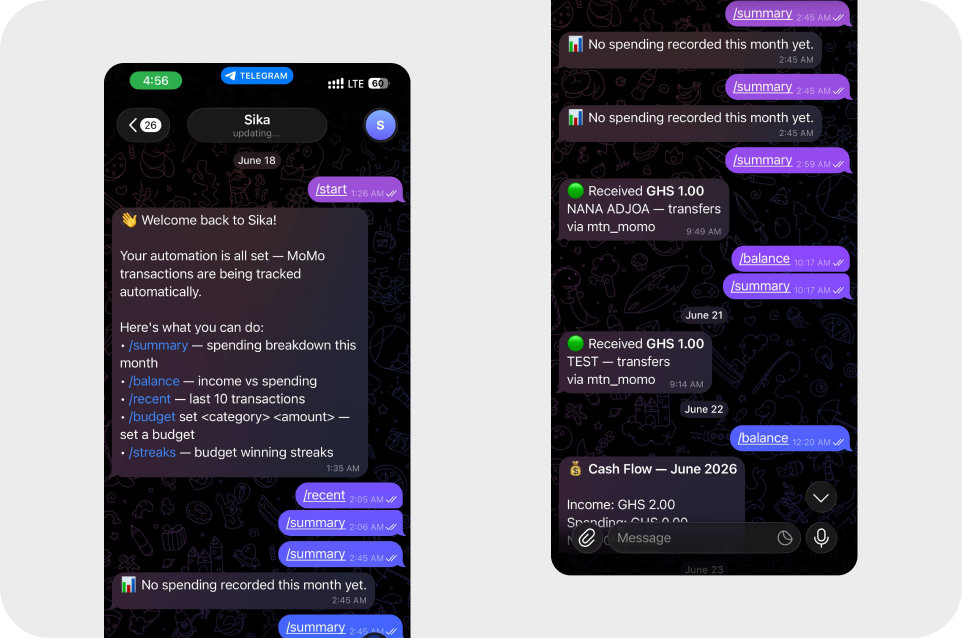
Send a screenshot to the bot, and Claude reads it, extracts the amount, the merchant, the date, and logs it straight to the database. From there, it categorizes the transaction on its own — food, transport, bills, whatever it is — and over time, starts surfacing real patterns back to the user: what they're actually spending on, and where the money quietly disappears to.
No manual entry. No new habit to build. Just let the bot do its thing.
My Role
Builder, not engineer — and that distinction matters here
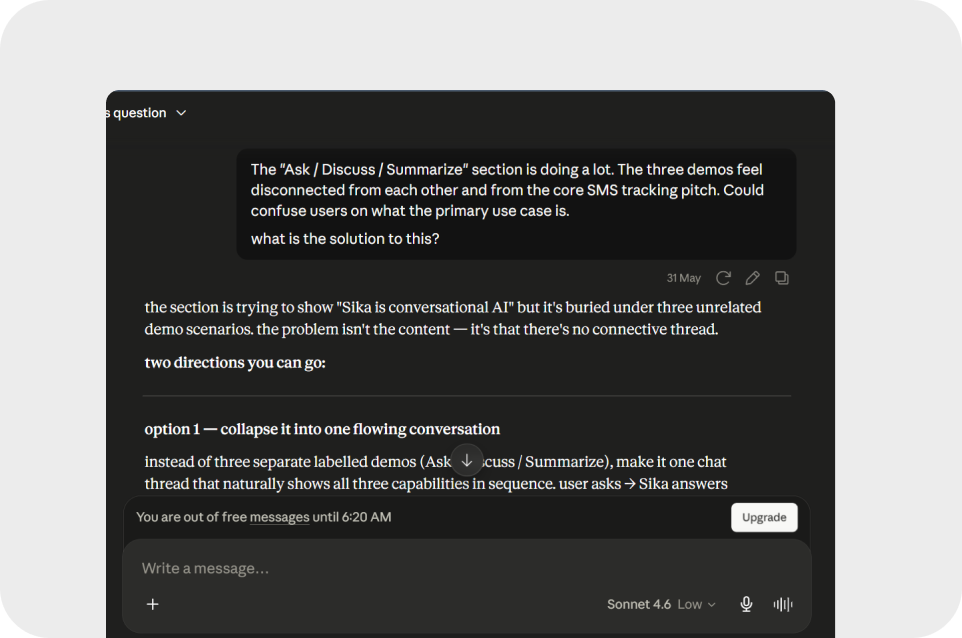
I'm not a trained developer. I'm a builder who happens to have very clear opinions about how a product should feel and work, and no formal background in shipping backend systems to prove it. Sika was built entirely with Claude as my engineering partner — I brought the product vision, the user problem, and relentless iteration; Claude wrote and rewrote the code until it actually worked.
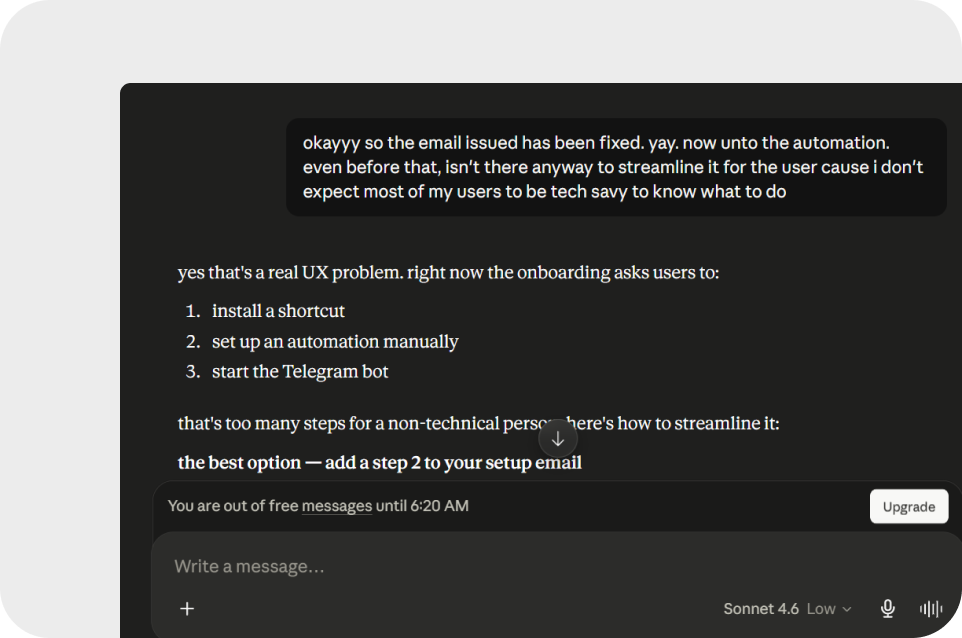
That process wasn't a straight line. It involved genuinely painful, P-A-I-N-F-U-L production debugging — a deleted database compute endpoint that took the whole bot down, broken email sender domains, rebuilding how the iOS shortcut got distributed after the original method stopped working, and building a full Telegram deep-linking flow just so accounts could link properly. None of that was easy and with no engineering background you can imagine how confused i was. All of it had to get solved before Sika could work for anyone but me.
- Defined the product vision, feature scope, and user experience
- Designed and iterated the landing page (sikafinance.vercel.app)
- Directed and debugged the technical build in partnership with Claude — end to end, from database issues to deployment
Research
There wasn't a budget for user interviews or a research team to run them, so the research was scrappier and, honestly, more honest than most: Asked my friends and some random strangers who probably thought i was weird lol, I looked at what existing financial apps were actually doing, and I read what real people were saying about them.
A lot of that came from Twitter — genuine, unprompted complaints from people about budgeting apps that didn't stick, expense trackers that felt like homework, and the general exhaustion of having to remember to log something every single time money moved. That kind of feedback doesn't show up in a formal research report, but it's some of the most honest signal you can get, because nobody's complaining to be helpful. They're just venting about something that's actually broken for them.
The pattern was the same: people don't fail at tracking expenses because they're lazy. They fail because every tool makes it an annoying chore. That's the gap Sika was built to sit in.
Design Process
The Bot Experience
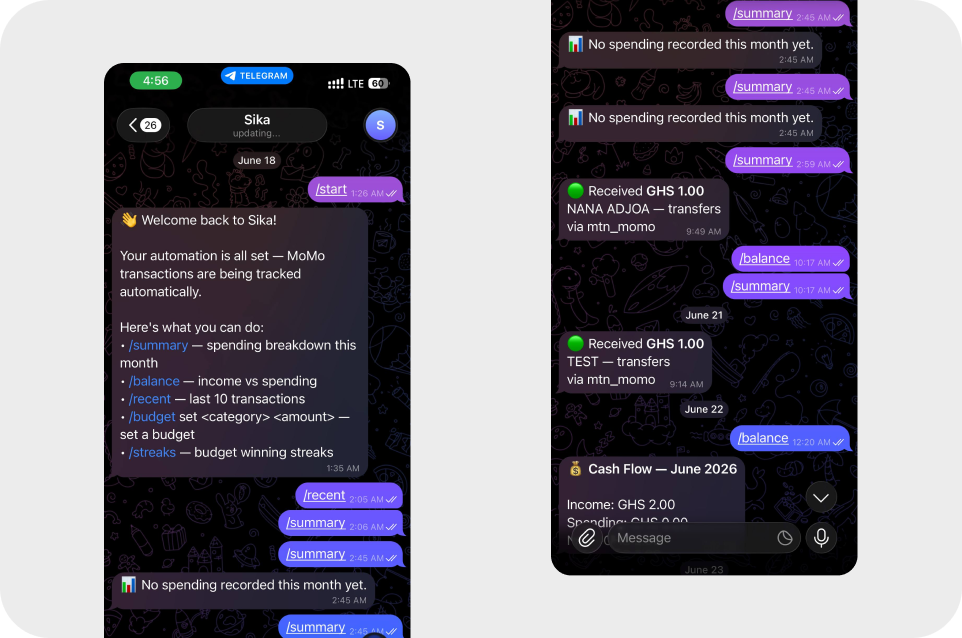
Once linked, Sika works in the background — MoMo receipts get forwarded automatically, no action needed from you. Gemini Flash reads the amount, merchant, and date, logs it, and categorizes it on its own, getting sharper the more it sees. Over time, those logs turn into real patterns: where your money's actually going, and what quietly eats more than you'd think
Account Linking
One of the harder problems to solve wasn't visual — it was structural. Getting someone from "I found this bot" to "this bot knows who I am and remembers my data" needed a proper account-linking flow, built entirely on Telegram's deep-linking system
When someone pays, the backend generates a secure identifier tied to their account. The setup email offers two paths from there — one installs an iOS Shortcut for automatic capture, the other deep-links straight into the Telegram bot. Either path silently completes the connection on the backend, linking the user's Telegram account to their profile so future messages and notifications route to the right person automatically
The Landing Page
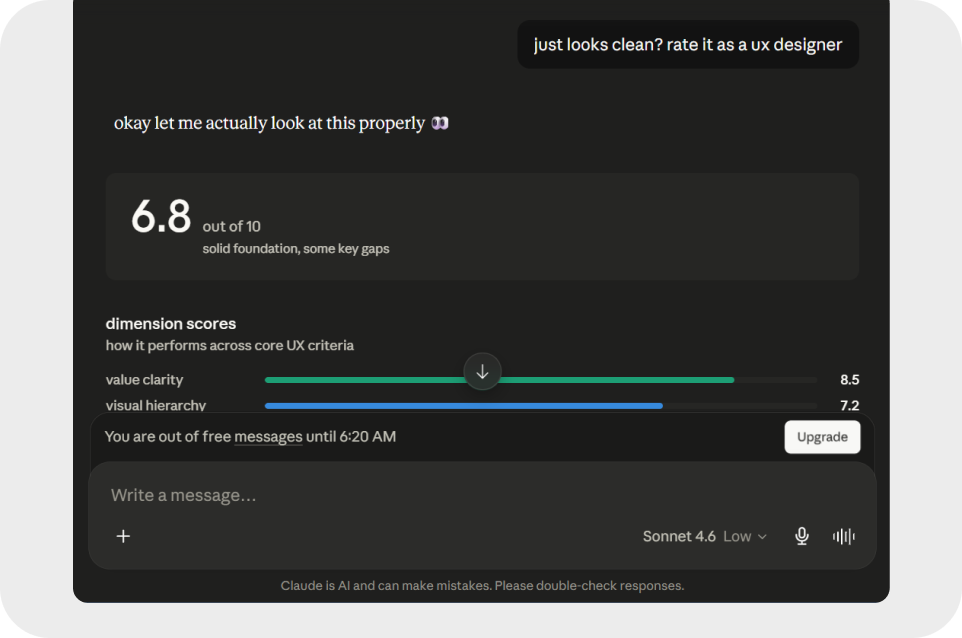
The bot lives on Telegram, but people still needed somewhere to land first — somewhere that explained what Sika actually does before they'd trust it with their spending data. The landing page went through a full UX audit and a handful of rounds of polish: a before/after comparison section showing what tracking expenses looks like with versus without Sika, a sticky phone scroll effect to keep the product visual in view while people read, mobile responsiveness fixes, and a proper privacy policy page — because asking people to hand over their financial data means earning that trust upfront, not as an afterthought.
Where It's At
Sika is still under active development — this isn't a finished, metrics-backed launch story yet, and I want to be upfront about that rather than dress it up as more than it is. There are no user numbers to share here because the priority right now is getting the core experience right before pushing for adoption.
What that means in practice: regular updates, ongoing bug fixes, and features still being shaped based on how the bot actually gets used once more people start sending it receipts. I will get update you as that happens.
Thoughts
Sika taught me something I didn't expect going in: not knowing how to code isn't the same as not being able to build. It changes how you build — you lean harder on iteration, on describing the problem clearly, on debugging by asking better questions instead of reading a stack trace yourself — but it doesn't stop you from shipping something real.
It also made me a lot more comfortable sitting inside the uncomfortable parts of building a product — the deleted database, the broken email domain, the three different ways the iOS shortcut distribution had to be rebuilt before it worked. None of that makes it into a polished portfolio screenshot, but it's most of what actually happened. I'd rather be honest about that than pretend it was a straight line and i have loved the process.