 Back
Back
Creating an Easy Solution for Business Owners
An all-in-one platform that lets business owners track inventory, manage orders, engage customers, and handle marketing — without the stress
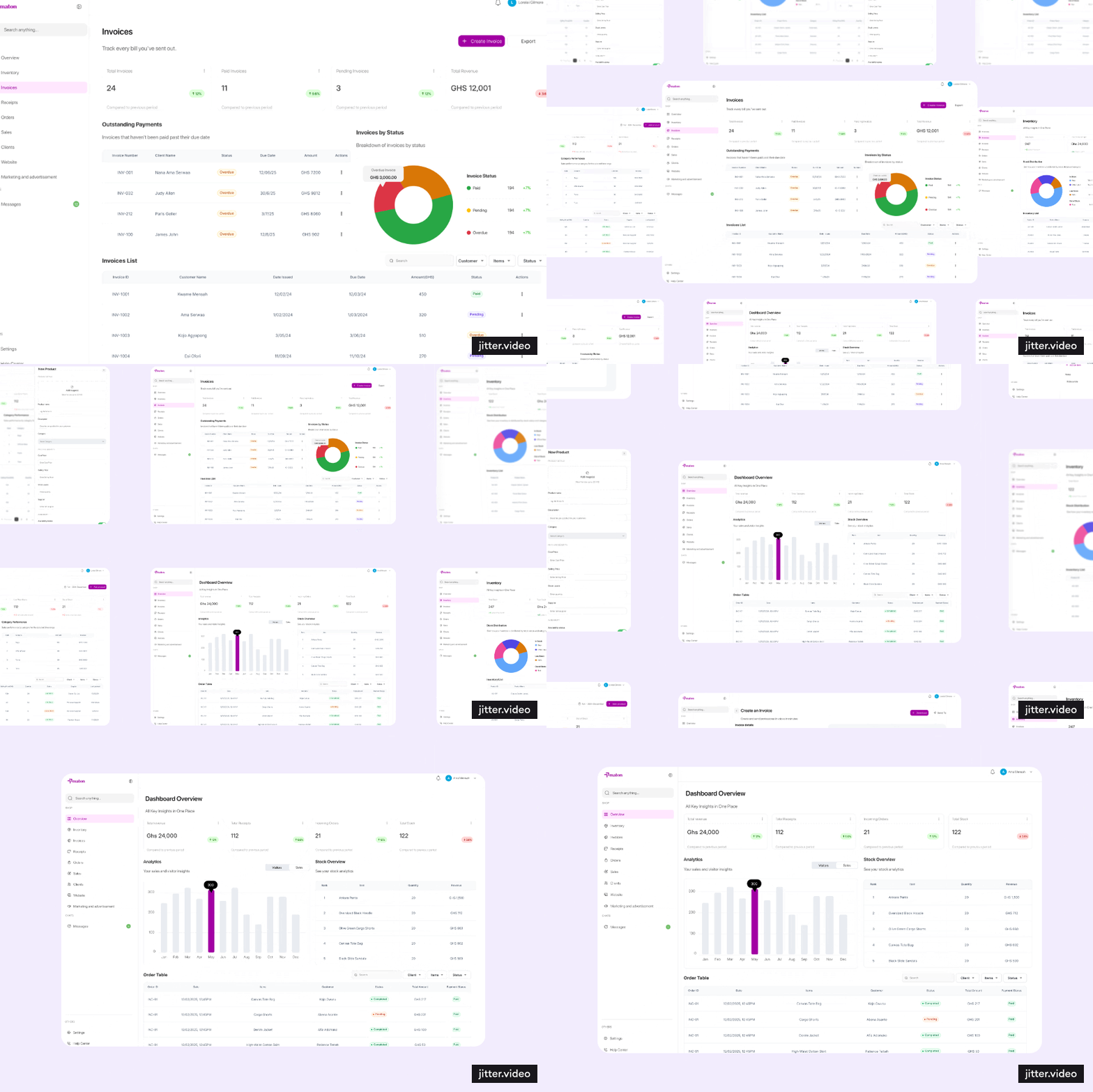
.png)
Backstory
Meet Ama. She runs a small clothing store and sells online and offline. Her mornings start with checking WhatsApp messages from clients, then a frantic inventory count, followed by manually entering orders into an Excel sheet. By lunchtime, she's already stressed because she missed a pending order. The afternoon is spent trying to update her social media and reply to customer queries—while secretly wondering if she's losing sales without even realizing it.
Sound familiar? That's exactly the chaos Maton was built to fix.
Small business owners across Ghana were running their entire operations across WhatsApp, Excel, Instagram DMs, and memory. So the question became: what would it take to bring all of that into one place, without making it feel like "software" to someone who's never used a business tool in their life?
The Problem
Business owners feel overwhelmed managing multiple tasks at once. Tracking products and stock levels is tricky, done manually or not at all. Customer communication eats hours of the day across scattered channels. And marketing — reaching more customers, staying visible — is a constant, low-priority struggle that gets pushed aside because there's no time for it
None of these problems are new. What's new is expecting one small business owner to solve all of them by herself, every single day, with tools that were never built for how she actually works
Process
How we went about it
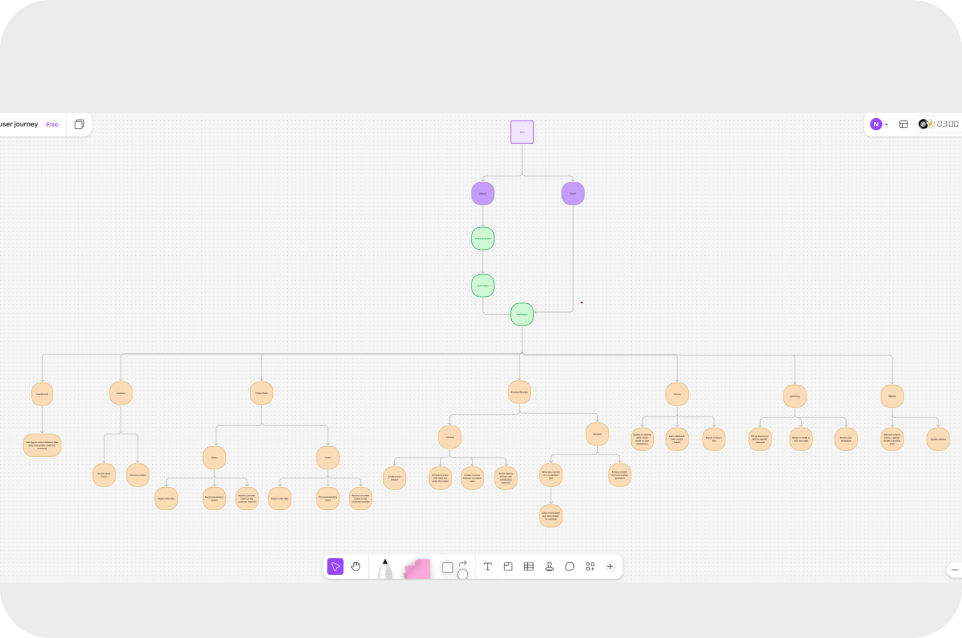
We broke the problem down before jumping into screens. What were we actually trying to do? How were we going to get there?
- Owners feel overwhelmed managing multiple tasks at once
- Tracking products and stock levels is tricky
- Customer communication takes too much time
- Marketing and reaching more customers is a constant challenge
From there, we brainstormed solutions to tackle each pain point:
- Real-time inventory tracking with low-stock alerts
- Sales insights and performance reports
- Centralized communication hub for customers
- Marketing tools for campaigns and promotions
- Easy-to-use dashboards for a bird's-eye view of the business
We sketched workflows, mapped user journeys, and identified the core features that would make life easier for business owners — then prioritized what actually needed to exist in v1 versus what could wait
Solution
Maton brings everything you need to run your business into one smooth, easy experience — clear insights, simple management, and tools that just work together.
Design Process
The magic behind the scenes
Maton brings everything you need to run your business into one smooth, easy experience—clear insights, simple management, and tools that just work together
Inventory: Owners can add products in seconds — name, price, stock count, photo — without any of the spreadsheet overhead they were used to. As stock moves with each sale, the count updates automatically, and low-stock alerts fire before an item runs out completely, instead of after a customer's already been turned away.
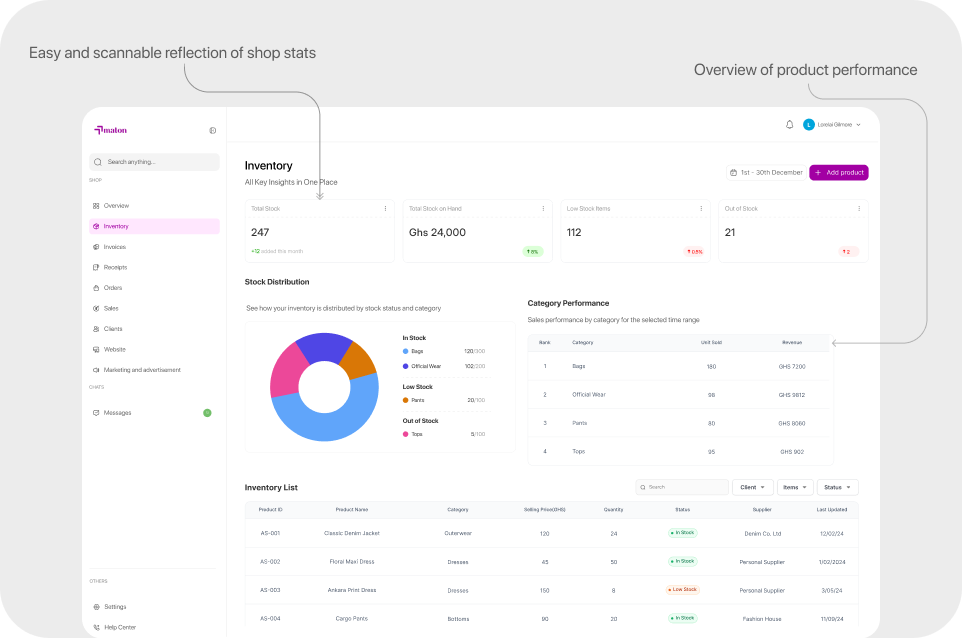
Orders: Every order, whether it comes in through WhatsApp, Instagram, or a walk-in customer, lands in one list instead of three different apps. Each order shows its status at a glance — pending, packed, delivered — so nothing quietly falls through the cracks the way it used to on a messy Excel sheet.
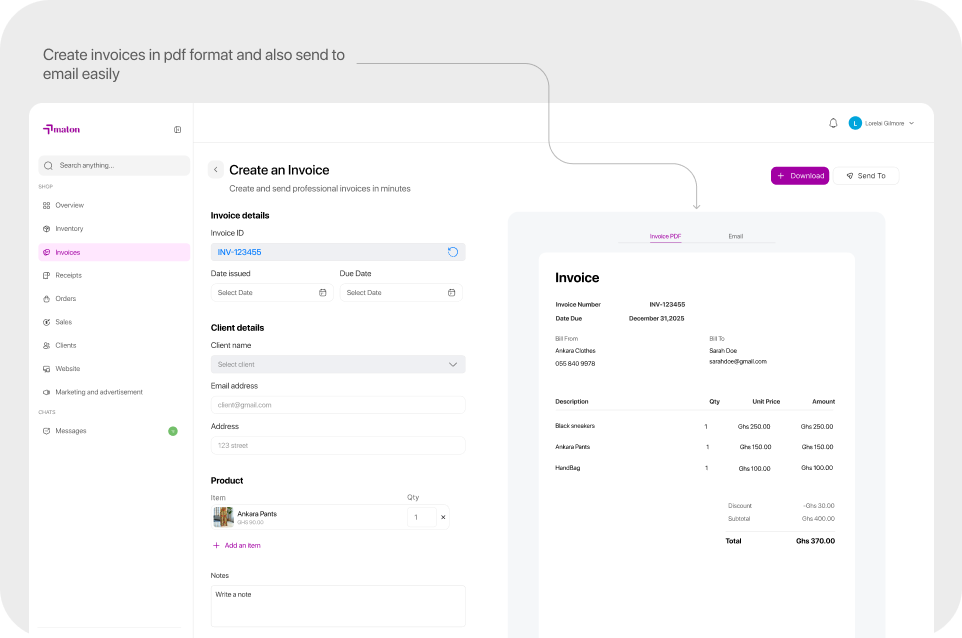
Customer Communication: Messages from every channel funnel into a single inbox, tagged to the order or product they relate to, so owners aren't hunting across apps to remember what a customer already asked. Quick-reply templates handle the repetitive questions, freeing up time for the messages that actually need a personal touch.
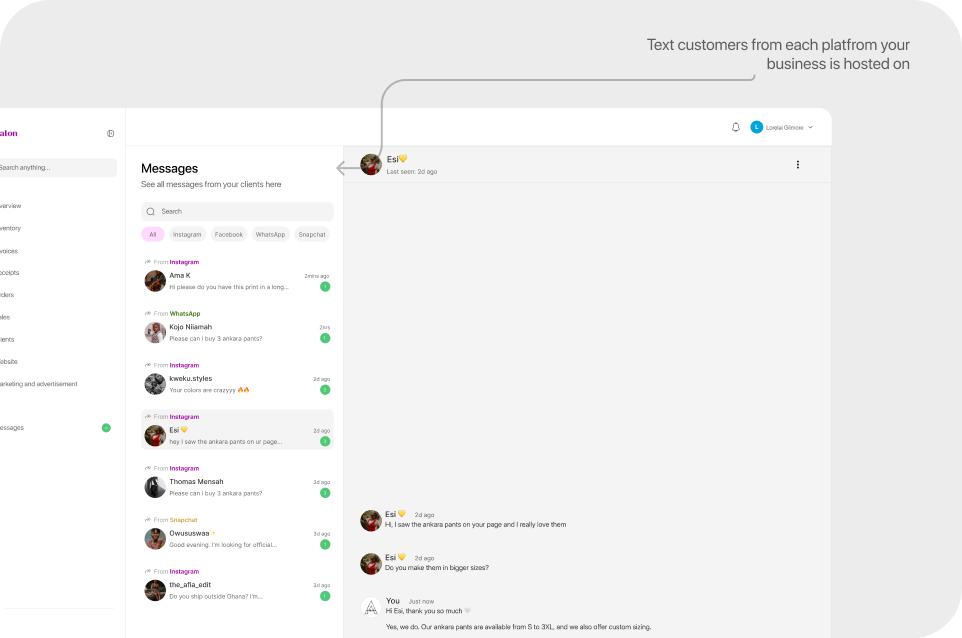
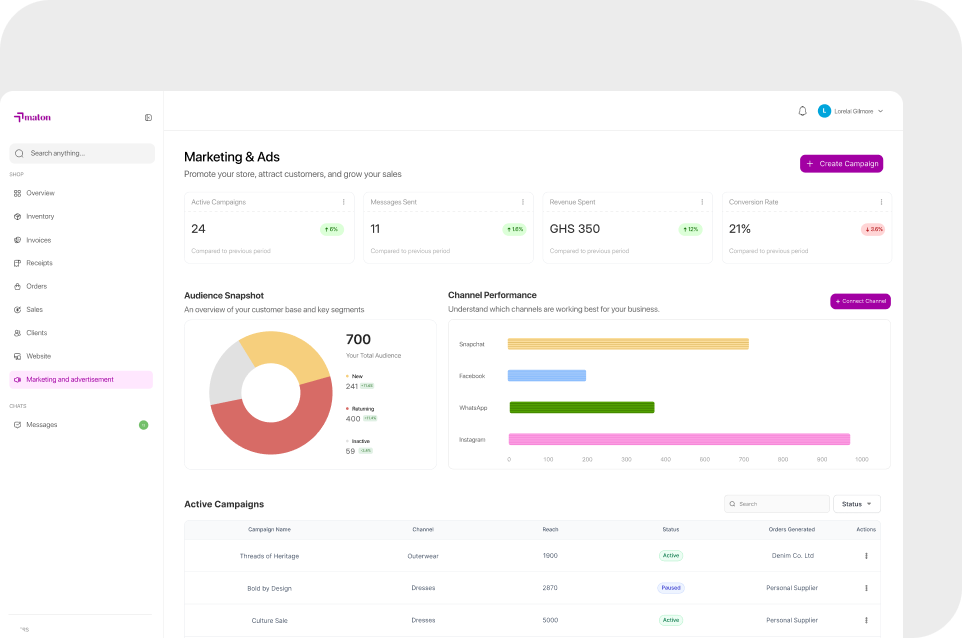
Marketing: Owners can put together a promotion or discount code in a few taps and schedule it to go out when it matters, then see straightaway whether it actually moved product. No more marketing as an afterthought squeezed in after everything else is done.
Expected Impact
For an owner like Ama, the shift is going from juggling three or four apps to working out of one. Orders that used to slip through the cracks of a messy WhatsApp thread get caught before they're missed. Marketing stops being the thing that only happens "when there's time" and becomes something that fits into the daily flow of running the shop.
Lessons
Design with context, not assumptions. Early on, I assumed owners would want a detailed analytics dashboard front and center. In testing, most of them skipped right past it and went straight for the order list — what they actually needed wasn't more data, it was to see, at a glance, whether today's orders were handled. That reshaped how I prioritized the whole layout.
Simplicity is the real luxury. This project taught me how design can humanize complex systems. I learned to balance operational accuracy with emotional reassurance — showing that even in a tool built for logistics, simplicity is what actually makes someone trust it enough to use it daily.